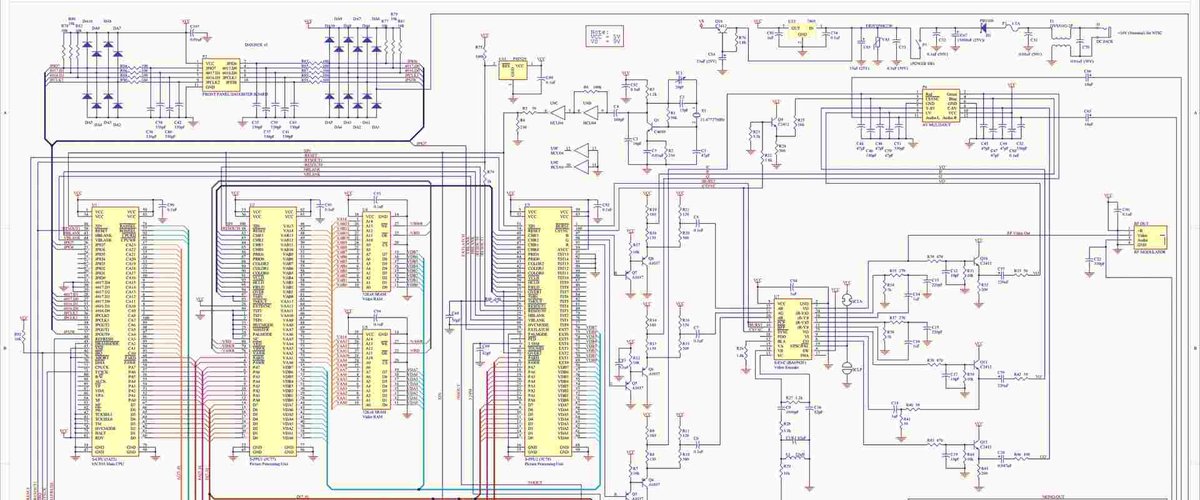
Platform-Specific Schematic Modding: Unlocking Hardware Potential Across Devices
Imagine effortlessly replicating complex structures or custom hardware configurations with a click, not just within a single game or application, but across a spectrum of digital environments. This isn't just a fantasy for master builders or tech enthusiasts; it's the core promise of Platform-Specific Schematic Modding. By understanding and leveraging the unique blueprints tailored for different systems, you gain an unprecedented level of control, efficiency, and creative power, transforming how you interact with and augment your digital worlds.
From intricate automated factories in your favorite block-building game to custom interface layouts on a smart device, schematics are the silent architects. But these aren't one-size-fits-all solutions. Each platform, each game, often each major mod within a game, speaks its own language, demanding a specific schematic dialect. Mastering this specificity is the key to truly unlocking the hardware and software potential lying dormant in your digital toolkit.
At a Glance: Key Takeaways for Schematic Mastery
- Schematics are Digital Blueprints: They capture and allow replication of complex digital structures or configurations.
- Platform-Specificity is Crucial: Different games, mods, or applications often use unique file formats and toolsets for schematics.
- Understanding File Formats is Power: Knowing
.schematicfrom Create mod's proprietary format dictates compatibility and workflow. - Community is Your Best Friend: Dedicated sites (like
createmod.com,minecraft-schematics.com,abfielder.com) are invaluable resources. - Tools Like Litematica Bridge Gaps: Some advanced mods offer features to create, manipulate, and even convert schematics between formats.
- Modding isn't Just for Gaming: The principles apply to custom hardware, software setups, and more.
- Always Verify Sources: Download schematics and mods only from trusted sites to protect your system.
The Foundation: What Exactly is Platform-Specific Schematic Modding?
At its heart, schematic modding is the art and science of saving, sharing, and deploying pre-designed structures or configurations within a digital environment. Think of a schematic as a detailed architectural blueprint for a specific digital construct – be it a building, a circuit, or even a UI layout. It contains all the information needed to recreate that exact design, block by block, component by component, or setting by setting.
The "platform-specific" aspect is where things get interesting and, frankly, a bit complex. It means that a schematic designed for one specific game version, mod, or even a piece of real-world hardware, might not work—or might not work correctly—on another. This isn't arbitrary; it's due to fundamental differences in how platforms store data, interpret commands, or render objects.
For example, a schematic for a Minecraft build created using the vanilla game’s data structure will differ significantly from one designed for the Create mod. The Create mod introduces entirely new blocks, mechanics, and potentially even coordinate systems that the vanilla schematic format simply isn't equipped to describe. The same logic applies to other domains: a configuration schematic for a 3D printer slicing software won't be compatible with a CAD program. Recognizing these distinct "dialects" is the first step toward becoming a truly capable schematic modder.
The "Why": Benefits of Embracing Schematic Modding
Why bother delving into these technical nuances? The advantages of platform-specific schematic modding are compelling, transforming tedious manual work into streamlined, creative processes.
Efficiency and Speed Beyond Manual Builds
The most immediate benefit is the sheer speed of deployment. Instead of painstakingly placing thousands of blocks or configuring dozens of settings manually, a schematic allows you to "paste" an entire structure or configuration in moments. This is invaluable for:
- Reproducibility: Recreating a favorite design multiple times without error.
- Mass Production: Deploying identical or slightly varied structures across a vast digital landscape.
- Iterative Design: Quickly testing different layouts or components without committing to long build times.
Unlocking New Creative Horizons
Schematics aren't just about repetition; they're powerful creative tools. By allowing instant iteration and deployment, they free you from the drudgery of construction and let you focus on conceptual design.
- Experimentation: Build complex ideas in a temporary sandbox, save them, and deploy only the best versions.
- Collaboration: Share your intricate designs with others, allowing them to instantly experience and build upon your work, regardless of their building skill.
- Education: Use schematics to teach complex redstone circuits or architectural principles, providing tangible examples that can be instantly replicated and studied.
A Stronger, More Connected Community
Schematics foster a vibrant ecosystem of sharing and learning. Dedicated platforms thrive on user-submitted designs, creating a collective library of innovation. When you learn to create and deploy platform-specific schematics, you're not just improving your own workflow; you're contributing to and benefiting from this shared knowledge base.
Navigating the Ecosystem: Essential Tools and File Formats
The journey into schematic modding quickly brings you face-to-face with a landscape of specialized tools and varied file formats. Understanding these is paramount to success.
The Ubiquitous .schematic Format (and Its Cousins)
For a long time, the .schematic file format was the lingua franca for sharing Minecraft builds. It's a simple, widely supported format that stores block IDs, data values, and spatial information, making it excellent for vanilla or lightly modded game structures. You'll find a vast repository of these on sites like minecraft-schematics.com, which, despite its search quirks, boasts years of community-shared designs.
However, as Minecraft—and other platforms—evolved, so did the complexity of what players wanted to save. Newer mods, especially those introducing unique blocks or complex machinery, often required more robust or custom formats. This leads us to the crucial understanding from our ground truth: general schematic files and those for specialized mods like Create are often not interchangeable. They literally speak different data languages.
Create Mod Schematics: A Case Study in Specificity
The Create mod, known for its intricate mechanical contraptions and automated factories, is a prime example of platform-specific schematic modding in action. Its sophisticated block interactions and custom components demand a format that can capture this complexity. Unsurprisingly, Create uses its own proprietary schematic file format, distinct from the generic .schematic you might find elsewhere.
To find these specialized blueprints, you'd typically head to dedicated resources like createmod.com. Here, you'll discover a curated collection of designs perfectly tailored for the Create ecosystem, from automated farms to elaborate contraptions. Trying to load a Create schematic into a tool designed only for .schematic files, or vice-versa, will result in errors or, at best, a broken mess of unrecognizable blocks. For a deeper dive into these specialized blueprints, consider understanding Create mod schematics.
Litematica: The Universal Translator (and Builder)
Fortunately, the modding community is resourceful. Tools exist to bridge these format gaps. Litematica, a popular modern schematic mod primarily for Fabric (and LiteLoader on 1.12.x), exemplifies this. Beyond its core function of displaying ghost schematics in-game for easy manual building, Litematica offers advanced features, including the ability to convert between different schematic formats.
This is a game-changer. If you've found a design on minecraft-schematics.com that's in the old .schematic format, but you want to use it within a Create modpack alongside Litematica, the mod can often handle the conversion. This capability makes Litematica an incredibly powerful tool for anyone serious about platform-specific schematic modding, effectively acting as a universal translator for your digital blueprints.
Another valuable resource for general designs and potentially other mod-specific content is abfielder.com. While the specific types of schematics it hosts may vary, it adds to the growing list of community hubs where you can find and share digital blueprints.
A Deep Dive into Minecraft Schematics: Practical Examples
Let's ground this with a concrete example in Minecraft, which perfectly illustrates the principles of platform-specific schematic modding.
Generating and Deploying Schematics with Litematica
Litematica isn't just for loading; it's also for creating schematics. Here’s a simplified workflow:
- Define Your Selection: In-game, use Litematica's selection tools to mark out the exact region you want to save. This could be a small house, a complex redstone contraption, or a large terraforming project.
- Save the Schematic: Once your selection is precise, use Litematica's menu to save it. You'll typically be prompted for a name, and the mod will save it in its native format, often a
.litematicfile. This file now contains all the information about the blocks, their properties, and their relative positions within your selected area. - Load and Build: To use this schematic later, or share it with a friend, simply load it via Litematica's menu. A transparent "ghost" outline of your build will appear in the world. You can then use Litematica's helper features (like material lists and block placement indicators) to rebuild the structure block by block, or, if you have sufficient permissions and tools (like a "paste" command from a world edit mod), deploy it instantly.
The beauty here is the fidelity. Litematica captures not just the block type but also its orientation, state (e.g., whether a door is open or closed, what fluid is in a tank), ensuring your replicated structure is identical to the original. For more insights into specialized blueprints for automation, you might find it helpful to grasp how Create mod schematics work.
Converting Formats: Bridging the Divide
As mentioned, Litematica’s ability to convert is invaluable. Let's say you've downloaded an older .schematic file from minecraft-schematics.com.
- Import to Litematica: You would first import this
.schematicfile into Litematica. The mod attempts to interpret the older format. - Inspect and Adjust: Depending on the complexity and age of the schematic, Litematica might highlight unknown blocks or offer options to replace deprecated ones. You might need to manually adjust some block types if they've changed significantly between Minecraft versions.
- Export in New Format: Once satisfied, you can then export the schematic in Litematica’s native
.litematicformat, or potentially a mod-specific format if Litematica has an integration for it (like Create mod's schematics). This effectively "updates" the schematic, making it compatible with your current mod setup and version of Minecraft. This capability underlines the essence of platform-specific schematic modding: adapting designs to fit different technical contexts.
Beyond Minecraft: General Principles for Other Platforms
While Minecraft provides an excellent example, the principles of platform-specific schematic modding extend far beyond gaming. Think about custom firmware for microcontrollers, specific CAD designs for 3D printing, or even intricate automation scripts for office software.
1. Identify the Platform's "Language"
Every platform or application has its way of defining and storing configurations or structures.
- File Extensions:
.cfg,.ini,.json,.xml,.yamlare common text-based configuration formats. Binary formats (like Create's schematics) are often proprietary. - API Documentation: For software-based platforms, the Application Programming Interface (API) dictates how external tools can interact and create/modify elements.
- Hardware Specifications: For physical hardware, schematics might refer to circuit diagrams, PCB layouts (e.g.,
.kicad_pcb), or 3D models (.stl,.step).
Your first step is always to understand what file types a specific platform expects for custom content or configurations. This will dictate where you look for existing schematics and what tools you'll need to create your own.
2. Leverage Platform-Specific Toolkits
Just as Litematica serves Minecraft, other platforms have their own dedicated toolsets.
- CAD/CAM Software: For manufacturing, these programs are designed to create and manage highly detailed schematics for physical objects.
- IDE (Integrated Development Environments): For software, IDEs allow you to define and manage code structures, often with built-in tools for scaffolding or templating.
- Domain-Specific Editors: Many specialized applications (e.g., network configuration tools, sound design software) come with their own interfaces for saving and loading complex settings.
Always prioritize tools built specifically for the platform you're modding. They are most likely to handle the nuances of the platform's "language" correctly. When considering tools for game modding, for instance, knowing what makes Create mod schematics unique can guide your choice.
3. Tap into Community Knowledge Bases
No matter the platform, dedicated communities are your most valuable asset. Forums, wikis, Discord servers, and specialized websites are treasure troves of information.
- Finding Existing Schematics: Sites like
createmod.com,minecraft-schematics.com, andabfielder.comfor Minecraft are just examples of what you might find for other domains. A quick search for "[Platform Name] schematics" or "[Application Name] configurations" will often lead you to community repositories. - Troubleshooting: Encountering issues with compatibility or deployment? Chances are someone else in the community has faced—and solved—the same problem.
- Learning Best Practices: Communities often develop conventions and best practices for creating and sharing schematics, ensuring greater compatibility and usability.
Crafting Your Own Schematics: Best Practices for Success
Creating your own schematics, whether for a game or a custom hardware project, is immensely rewarding. Here's how to do it well.
1. Plan Meticulously
Before you even open your tool of choice, have a clear vision.
- Define Purpose: What problem does this schematic solve? What function does it perform?
- Outline Components: What elements (blocks, devices, settings) will be included?
- Consider Scale: How large or complex will the schematic be? This impacts performance and ease of sharing.
2. Choose the Right Tools
Use the platform-specific tools designed for schematic creation. For Minecraft, that means Litematica for in-game capture, or potentially external editors for more programmatic control. For other systems, it might be specialized design software or configuration editors. Remember that understanding the intricacies of Create mod schematics often requires using Create's own in-game tools or dedicated community resources.
3. Document Everything
This is perhaps the most overlooked, yet critical, step.
- Metadata: Add descriptive names, authors, and version numbers to your schematic files. Many tools allow this directly.
- ReadMe Files: If sharing, include a separate text file explaining the schematic's purpose, usage instructions, required dependencies (e.g., specific mods or software versions), and any known quirks.
- Visuals: Screenshots or short videos demonstrating the schematic in action can be incredibly helpful.
4. Test Thoroughly
Never assume a schematic will work perfectly on its first deployment.
- Test in a Controlled Environment: Use a dedicated test world or a virtual machine to ensure the schematic deploys correctly without affecting your main project.
- Test on Different Versions/Configurations: If your schematic is meant to be widely compatible, test it across various versions of the platform or with different sets of mods/software installed.
- Check for Dependencies: Does your schematic rely on specific mod blocks or software libraries? Ensure they are present and functioning.
5. Optimize for Performance and Clarity
Large, poorly optimized schematics can be resource-intensive.
- Remove Unnecessary Elements: Trim away empty spaces or irrelevant components if your schematic tool allows.
- Simplify Where Possible: Can a complex arrangement be achieved with fewer blocks or simpler settings without losing functionality?
- Organize Layers (if applicable): For multi-layered designs, organizing by layers in your schematic tool can make future editing and troubleshooting easier.
Common Pitfalls and How to Avoid Them
Even seasoned modders run into issues. Being aware of common traps can save you hours of frustration.
1. Format Incompatibility
This is the biggest hurdle in platform-specific schematic modding. Trying to load a Create mod schematic where a generic .schematic file is expected, or vice-versa, will always fail.
- Solution: Always verify the expected file format for your specific platform or mod. Use conversion tools like Litematica when available, but be prepared for potential manual adjustments. Always check the source website's documentation (e.g.,
createmod.comfor Create-specific designs) for file type information.
2. Version Conflicts
Digital environments are constantly updating. A schematic created in Minecraft 1.16 might use block IDs that no longer exist or have changed in 1.20, leading to missing blocks or corrupted structures.
- Solution: Check the schematic's stated version compatibility. When downloading from sites like
minecraft-schematics.comorabfielder.com, pay close attention to the version tags. If creating your own, document the exact version used. When converting, be mindful of block ID changes across versions.
3. Unverified Sources and Security Risks
Downloading schematics from untrusted websites can expose you to malicious files or broken designs.
- Solution: Stick to reputable community hubs and official mod pages. For Minecraft,
createmod.com,minecraft-schematics.com,abfielder.com, and CurseForge are generally safe bets. Always use antivirus software and be wary of anything that requires unusual permissions or executable files bundled with a schematic.
4. Over-Modding and Performance Issues
Loading too many complex schematics or using them in a heavily modded environment can strain your system resources, leading to lag or crashes.
- Solution: Be mindful of the size and complexity of the schematics you're deploying. Optimize your game or application settings. Consider using a dedicated test environment to gauge performance before deploying to your main world or project.
5. Lack of Understanding of Dependencies
Many schematics rely on specific mods, resource packs, or software libraries to function correctly. Without these dependencies, the schematic will be incomplete or broken.
- Solution: Always read the schematic's documentation or description carefully. It should list all required dependencies. If creating your own, meticulously document every mod or program that contributes to your schematic's functionality. This is particularly vital when dealing with specialized designs, as is the case when you're working with advanced Create mod schematics.
The Future of Schematic Modding: AI, Interoperability, and Beyond
The landscape of schematic modding is far from static. As technology evolves, so too will the tools and possibilities.
- AI-Driven Generation: Imagine AI algorithms capable of generating highly optimized, functional schematics based on natural language prompts, dramatically speeding up design processes.
- Enhanced Cross-Platform Tools: While Litematica provides a glimpse, future tools might offer even more seamless, intelligent conversion between vastly different formats, reducing the headache of "platform-specific" limitations.
- Augmented Reality (AR) Integration: Deploying schematics into real-world environments via AR could revolutionize fields like architecture, construction, and urban planning, allowing for virtual prototyping on physical sites.
- Broader Application: The principles of schematic modding will likely extend to even more diverse fields, from scientific simulations to personalized smart home configurations, making complex setups accessible to a broader audience.
The core idea—defining, saving, and deploying structured information—is a powerful concept with limitless potential.
Taking Your Builds to the Next Level
You now have a solid understanding of Platform-Specific Schematic Modding. It’s more than just a trick for quick builds; it’s a strategic approach to digital creation, emphasizing efficiency, reproducibility, and collaborative innovation.
To truly master this skill, start applying what you've learned. Experiment with creating your own schematics using tools like Litematica. Explore the vast libraries on createmod.com, minecraft-schematics.com, and abfielder.com to see the incredible variety of designs out there. Don’t be afraid to delve into the documentation of your favorite mods or applications to understand their unique schematic "languages."
The digital world is your canvas, and platform-specific schematics are your advanced brushstrokes. Go forth and build, create, and innovate with newfound precision and power. The only limit is your imagination.